
If you own a home in Northeast Ohio, your attic is working harder than you think. Between lake-effect snow, sudden freeze-thaw cycles, and humid summers off Lake Erie, the air space above your ceiling is in a constant battle with moisture and temperature swings. Proper attic ventilation isn't a "nice to have" — it's the single most overlooked factor that determines whether your roof lasts 25 years or starts failing at
- This guide breaks down how north east roof venting actually works, the warning signs of a poorly ventilated attic, and what M&T Roofing recommends for homes from Elyria to Lakewood.
How Attic Ventilation Works
A healthy attic breathes. Cool, dry air enters low (at the eaves) and warm, moist air exits high (at the ridge). That continuous airflow keeps the underside of your roof deck close to the outside temperature, which prevents condensation in summer and ice dams in winter.
Two components make it work:
- Intake vents — typically soffit vents under the eaves that pull cool outside air into the attic
- Exhaust vents — ridge, box, or gable vents at the top of the roof that let hot, humid air escape
The key is balance. Code in Ohio generally requires 1 square foot of net free vent area for every 150 square feet of attic floor (or 1:300 with a vapor barrier), split roughly 50% intake / 50% exhaust. If exhaust outweighs intake — common when homeowners add a powered fan — the system pulls conditioned air out of your living space and short-circuits itself. Without enough intake at the soffits, even the best ridge vent can't do its job.
Signs of Poor Attic Ventilation
Most ventilation problems are silent until they're expensive. Here's what to watch for in your Northeast Ohio home:
- Ice dams along your eaves in winter — heat trapped in the attic melts snow on the roof, then refreezes at the cold edge
- Frost or moisture on the underside of your roof deck — visible when you check the attic on a cold morning
- Mold or dark staining on attic insulation, rafters, or sheathing
- Musty smells, sagging insulation, or peeling paint near the ceiling
- Curled, cupped, or prematurely aged shingles — overheated decking literally bakes shingles from below
- High summer cooling bills — a 150°F attic radiates heat down through the ceiling all night
- Damaged or rotted soffits, fascia, or roof decking
Any one of these is a sign your roof is being asked to compensate for an attic that can't breathe. Our guide to ice dam prevention walks through one of the most common (and damaging) ventilation failures we see across Lorain and Cuyahoga counties.
Ventilation Types Used on Northeast Ohio Roofs
Not all vents are created equal. Here's what actually works on local homes — and what we replace most often.
Ridge Vents
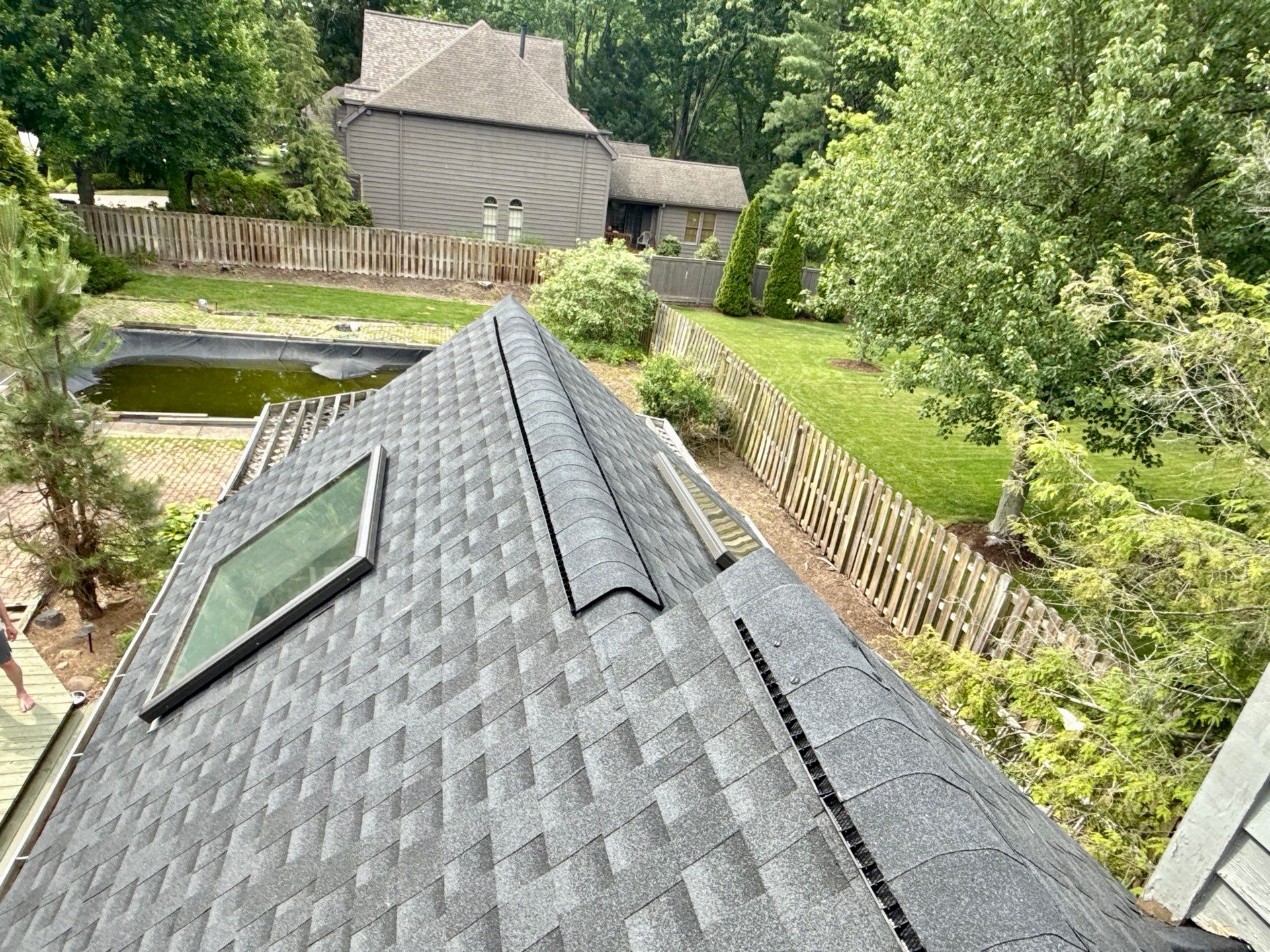
A continuous ridge vent runs along the entire peak of the roof, hidden under the cap shingles. It's the most efficient exhaust option for Northeast Ohio because it allows hot air to escape evenly across the whole attic. Paired with full-length soffit vents, it creates a smooth, balanced flow with no hot spots. This is the standard upgrade we install on nearly every full roof replacement.
Soffit Vents
Soffit vents are the unsung hero of the system. Without proper intake under the eaves, exhaust vents have nothing to pull from. We see countless older Ohio homes with painted-over, blocked, or missing soffit vents — meaning the ridge vent is essentially decorative. A proper inspection always starts at the soffits, not the peak.
Box Vents
Also called turtle vents or louver vents, box vents are square static vents installed near the ridge. They work, but you need several across the roof to match a single ridge vent's airflow, and they create more roof penetrations (more potential leak points). Box vents are common on cut-up roofs where a continuous ridge isn't possible. Ridge vent vs. box vent: ridge wins on most Ohio roofs for airflow, aesthetics, and fewer penetrations — but box vents are a solid backup on hip roofs or short ridge lines.
Powered Attic Fans
Powered attic fans (electric or solar) actively exhaust hot air. They sound great in theory but often cause problems in practice: they pull air-conditioned air out of the home through ceiling gaps, can depressurize the attic, and rely on motors that fail. We rarely recommend them for new installations in Northeast Ohio — a properly balanced passive system performs better year-round and never breaks down.
Why Northeast Ohio Homes Need Extra Attention to Ventilation
Ventilation matters everywhere, but our climate makes it critical. Three local factors put roofs here under unusual stress:
- Lake-effect snow — heavy, wet snow loads sit on Northeast Ohio roofs for weeks. Without proper ventilation, escaped attic heat melts the underside of that snow, creating the perfect ice dam recipe along the eaves.
- Freeze-thaw cycles — our winters routinely swing from 35°F to 15°F in a single day. Each cycle expands and contracts the moisture trapped in poorly ventilated decking, accelerating wood rot and shingle failure. Our freeze-thaw protection guide explains how this damage compounds over time.
- Summer humidity off Lake Erie — humid air condenses on cooler attic surfaces, soaking insulation and feeding mold. A properly ventilated attic flushes that humidity out before it can settle.
Add it all up: a Northeast Ohio attic without balanced ventilation is fighting a losing battle 12 months a year. We see it most often in homes built before 1990, in Elyria, Lorain, and the older Cleveland suburbs, where original ventilation was sized for a much milder climate than what Lake Erie delivers today.
How Poor Ventilation Voids Your Roof Manufacturer Warranty
This is the part most homeowners don't know until it's too late. Every major shingle manufacturer — GAF, Owens Corning, CertainTeed — requires adequate, balanced attic ventilation as a condition of their warranty. If your shingles fail prematurely and an inspector traces it back to a hot, moisture-soaked attic, your claim gets denied.
Specifically, manufacturers can void coverage when they find:
- Insufficient net free vent area for the attic size
- Intake-to-exhaust imbalance (especially exhaust without matching intake)
- Multiple exhaust types stacked on the same attic (a ridge vent plus a powered fan can short-circuit each other)
- Blocked soffits or insulation pushed into the eave baffles
A new GAF Master Elite® installation includes a written ventilation calculation as part of the job. If a contractor isn't measuring and documenting your ventilation, you're paying for a roof with a warranty that won't actually pay out when you need it.
How M&T Roofing Inspects and Upgrades Ventilation in Ohio Homes
Every M&T Roofing project — repair, replacement, or insurance claim — starts with a full ventilation assessment. As GAF Master Elite® Certified contractors, we follow a documented process:
- Measure the attic floor area and calculate required net free vent area
- Inspect existing intake — soffit vents, drip edge vents, fascia vents — for blockages, paint, or insulation obstruction
- Inspect existing exhaust — ridge, box, gable, or powered — for type, condition, and conflicts
- Check the attic interior for moisture stains, mold, frost, deck delamination, and insulation damage
- Verify baffles are installed at the eaves so insulation doesn't choke off airflow
- Recommend a balanced upgrade — typically continuous ridge vent + cleaned/upgraded soffit vents, sized to your specific attic
- Document everything so your manufacturer warranty stays intact
When we replace a roof, we install proper ventilation as part of the job — not as an upsell. When we repair a roof, we flag ventilation issues in writing so you can address them before they cost you a full replacement. See our full roofing services for what's included with every project.
Get a Free Attic Ventilation Assessment
If you're seeing ice dams, climbing energy bills, or shingles that look older than they should, your attic is probably the reason. M&T Roofing & Restoration offers a free, no-obligation attic ventilation assessment for Northeast Ohio homeowners — we'll inspect your intake, exhaust, insulation, and decking, and give you a written report on what (if anything) needs to change. Schedule your free assessment today and protect the roof you've already paid for.